

Self-Custody vs Exchange Custody: Where Should Your Crypto Live?
August 6, 2026
Where your crypto lives is one of the few decisions in this asset class with binary outcomes. Get it right and the choice never matters. Get it wrong — usually because an exchange fails — and the consequences are total. Understanding the trade-off is more important than most of the trading decisions that follow it.
Exchange custody
When you buy cryptocurrency on an exchange and leave it there, the exchange holds the private keys. You hold an account balance, which is functionally a claim against the exchange. The exchange typically pools customer assets in shared wallets, with internal accounting that tracks individual balances. Most of the time, this works exactly as advertised.
The advantages are real. Convenience: trading, withdrawing, and converting between assets happens instantly. Operational simplicity: no seed phrases to manage, no transactions to sign, no risk of self-inflicted loss. Recovery: if you forget your password, the exchange can reset it. Customer support: actual humans you can contact when something goes wrong.
The risk is also real. Exchanges fail. Mt. Gox, QuadrigaCX, FTX, Celsius — each was the largest or one of the largest exchanges in its market at the time of collapse. In every case, customers with funds on the exchange faced significant losses, lengthy bankruptcy proceedings, and recoveries that ranged from partial to zero. The phrase “not your keys, not your coins” is not paranoia. It’s a description of the legal reality.
Self-custody
When you withdraw cryptocurrency to a wallet whose private keys you control, the exchange’s solvency stops mattering. The funds are yours in the most literal sense — there’s no intermediary that can fail, freeze, or refuse withdrawal. The trade-off is that the responsibility for security shifts entirely to you.
The advantages: total control, zero counterparty risk, censorship resistance, and access to the full range of on-chain applications (DeFi, staking, NFTs) that exchange custody often restricts or simplifies. The disadvantages: total responsibility for security, the operational complexity of managing seed phrases and signing transactions, and the irreversibility of mistakes. If you lose your seed phrase, the funds are unrecoverable. If you sign a malicious transaction, the funds are gone. There is no support line.
The two practical custody options for self-custody
Software wallets (MetaMask, Phantom, Rabby, mobile wallets) keep the private keys on a connected device. Convenient for daily use; vulnerable to malware, phishing, and any compromise of the device. Appropriate for working balances — funds you’re actively using — not for long-term holdings.
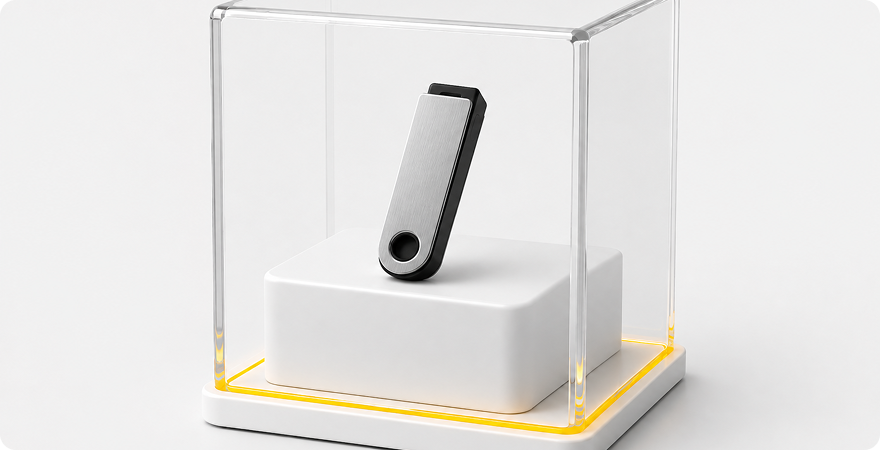
Hardware wallets (Ledger, Trezor, GridPlus, Keystone) keep the private keys on a dedicated offline device that signs transactions when connected. The device never exposes the keys to the connected computer. This is dramatically more secure than software wallets and is the standard for any meaningful long-term holding. The cost is a one-time hardware purchase (typically $80–$200) and a small amount of operational friction on every transaction.
A reasonable framework for where funds should live
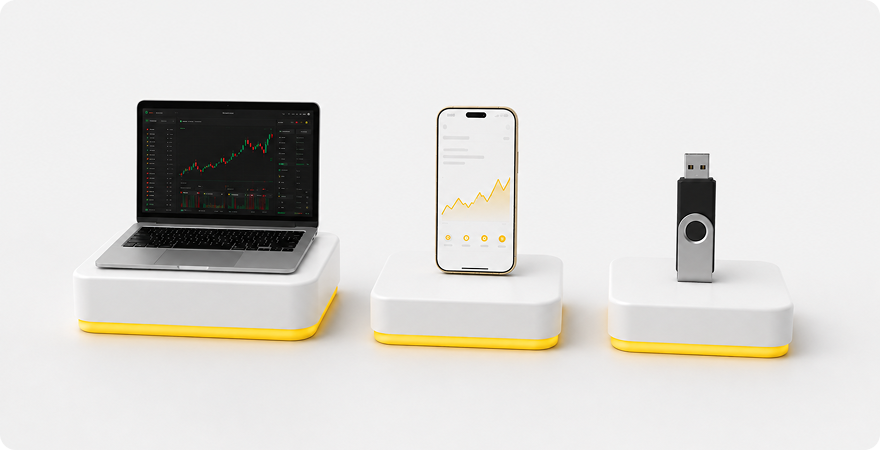
Trading and short-term funds. Stay on the exchange you’re trading from. The withdrawal friction would cost more than the marginal custody risk on small, actively-managed balances.
Medium-term holdings. Software wallet (mobile or browser extension) for funds you want accessible for on-chain activity but don’t need to trade frequently. Limit balances to what you’d be comfortable losing to a device compromise.
Long-term core holdings. Hardware wallet, full stop. Any balance large enough that its loss would meaningfully affect you belongs on a hardware wallet. The setup takes thirty minutes. The peace of mind is permanent.
The seed phrase is the actual asset

Whatever your custody approach, the seed phrase backing the wallet is the thing being protected. Write it down on paper or steel (not on a phone, not in cloud storage, not in a password manager), store it in at least two physical locations, and never share it with anyone for any reason. Every legitimate support process in crypto operates without ever needing your seed phrase. If anyone asks for it, it’s a scam.
The custody choice is not technically complex. It’s just consequential. The half-hour spent setting up proper custody is one of the highest-return uses of time in this asset class.
Continue with UAB Exchange
Subscribe to our weekly market brief for structural analysis of crypto market dynamics, on-chain flows, and the macro context shaping digital-asset prices.
Subscribe