

How to Build a Crypto Trading Plan (Step by Step)
July 23, 2026

The single behavioural change that improves new traders’ results the most is also the most boring: writing down a plan before the trade, and following it during. This is not glamorous, and it does not produce screenshots that get attention on social media. But the gap between traders with a written plan and traders without one is large enough to be visible in any dataset of retail returns, and it widens with time.
A useful trading plan has six sections.
One: objectives and constraints
What are you trying to accomplish with this capital? “Make money” is not specific enough. Practical objectives look like: “Grow this portfolio at an average annualized rate higher than my benchmark over a three-year horizon, accepting up to 50% interim drawdowns.” Constraints look like: “I will not deploy more than 30% of total liquid net worth into crypto. I will not use leverage. I will not invest funds I might need within twelve months.” These constraints define the boundary inside which the rest of the plan operates.
Two: portfolio construction
What are you trying to accomplish with this capital? “Make money” is not specific enough. Practical objectives look like: “Grow this portfolio at an average annualized rate higher than my benchmark over a three-year horizon, accepting up to 50% interim drawdowns.” Constraints look like: “I will not deploy more than 30% of total liquid net worth into crypto. I will not use leverage. I will not invest funds I might need within twelve months.” These constraints define the boundary inside which the rest of the plan operates.
Two: portfolio construction
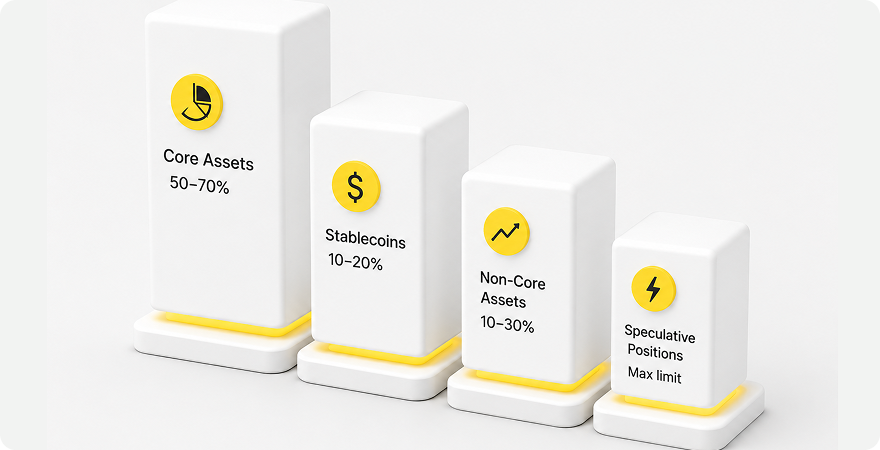
What’s the target allocation across categories? A reasonable starting structure for a beginner is something like: 50–70% in core assets (BTC and ETH), 10–20% in stablecoins as dry powder and yield generation, 10–30% in higher-conviction non-core assets, and a hard ceiling on speculative positions. The exact numbers matter less than the discipline of having them written down. The plan also specifies rebalancing rules: when do you rebalance back to target, and what triggers a structural change to the targets themselves.
Three: entry criteria
What has to be true for you to open a new position? This includes both the trade thesis and the market context. A thesis-only entry — “I think this protocol is undervalued” — is incomplete without context: at what price level, with what position size, with what time horizon. The criteria don’t have to be quantitative, but they have to be specific enough that you can tell after the fact whether they were met.
Four: exit criteria
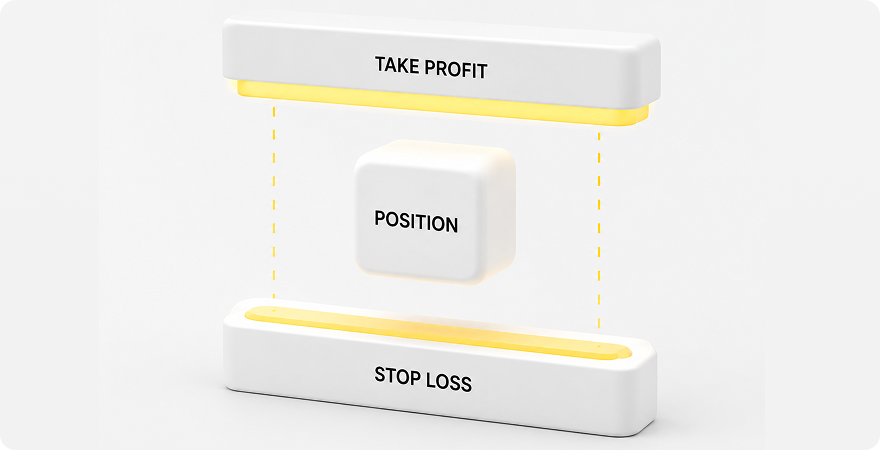
This is the section most traders skip and most regret skipping. Every position needs two pre-defined exits: the price at which the thesis has played out (take profit) and the price at which the thesis has been disproven (stop loss). Both numbers should be set before the position is opened and adjusted only based on new information, not based on emotional response to price movement. A useful rule: if you would not enter the position at the current price, you should be exiting it.
Five: risk management
Maximum position size per trade, maximum total exposure to a single sector or narrative, maximum acceptable drawdown before defensive action (reducing positions, moving to stablecoins, pausing new entries). The risk management section should make explicit what conditions would cause you to step back from the market entirely. New traders almost never set this in advance, which means by the time the conditions are met, they’ve already passed them.
Six: review cadence
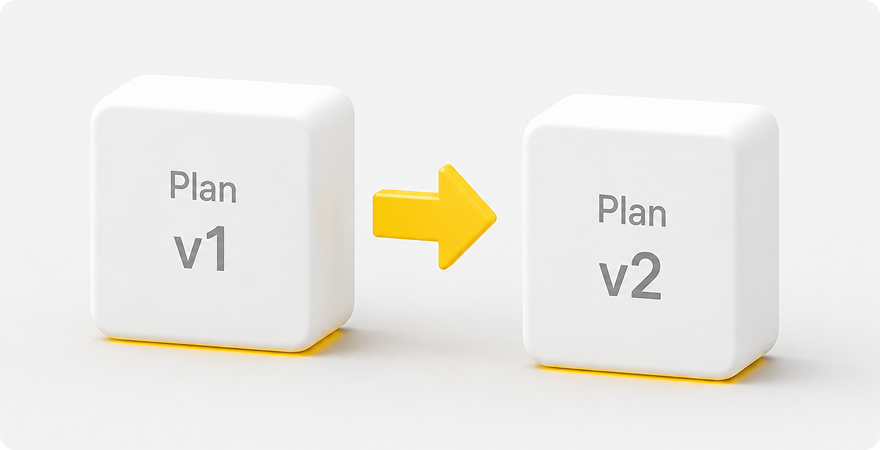
When do you review the plan itself? Quarterly is reasonable for most non-professional traders. The review is not for tweaking based on recent performance — that’s curve-fitting — but for evaluating whether the plan still matches your objectives, your constraints, and your understanding of the market. A plan you wrote in a bull market and never revised is not the right plan for a bear market.
What a plan does not contain
Specific predictions about asset prices. Promises about returns. A long list of contingencies for every possible market state. The plan should be short enough that you can re-read it in five minutes. If it’s longer than two pages, it’s a research document, not a plan.
The traders who outperform are not the ones with the best analysis. They’re the ones who follow a mediocre plan consistently while everyone around them follows brilliant analyses inconsistently. The plan is the edge.
Continue with UAB Exchange
Subscribe to our weekly market brief for structural analysis of crypto market dynamics, on-chain flows, and the macro context shaping digital-asset prices.
Subscribe